A 1970 Mercedes-Benz C 111 prototype in running condition is on sale at the RM Sotheby’s Paris Rétromobile 2027 classic car auction.
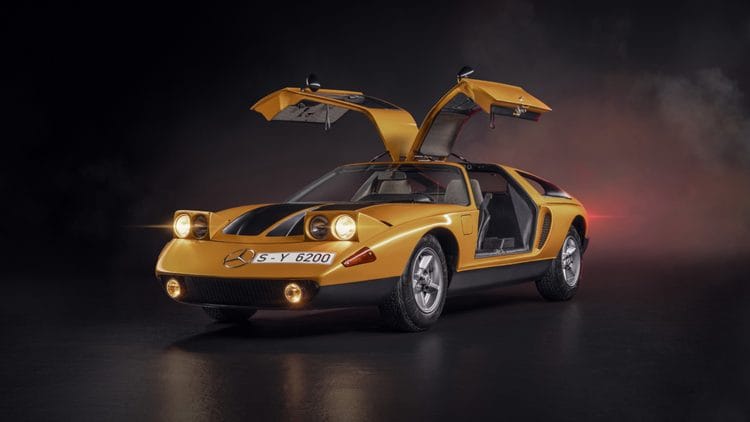
RM Sotheby’s announced that Mercedes-Benz is offering “Car 33”, a C 111-II prototype, for sale at the Paris Rétromobile 2027 auction. The wedge-shaped, orange prototype fitted with a four-rotor Wankel engine is among the most recognizable experimental automobiles ever built. Mercedes-Benz has never before offered a C 111 for sale and won’t sell another for at least 25 years. The expected price is “in excess of €25 million.”
RM Sotheby’s Paris Rétromobile 2027 Classic Car Auction
RM Sotheby’s Paris Rétromobile 2027 sale is scheduled for February 3, 2027, at Les Salles du Carrousel in the Louvre Palace, in Paris, France.
In 2026, the most expensive car in the RM Sotheby’s Paris 2026 sale was the 1960 Ferrari 250 GT SWB California Spider by Scaglietti, chassis 1915 GT, which sold for €14,067,500 ($17,176,418).
In 2025, RM Sotheby’s earned an impressive €69,073,275 in Paris. The top result was a model record €34,880,000 paid for the 1964 Ferrari 250 LM by Scaglietti, chassis #5893. This 250 LM won the 1965 24 Hours of Le Mans, and the sale set a new record for a Le Mans race-winning car.
Mercedes-Benz C 111 at RM Sotheby’s Paris Rétromobile 2027
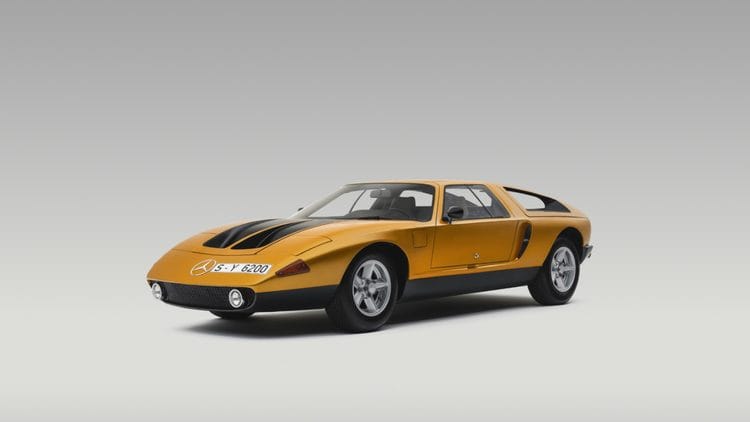
RM Sotheby’s announced that Mercedes-Benz AG will offer a running-condition C 111-II, fitted with an original 2.4-liter four-rotor Wankel engine, at its Paris auction. It will be the first time Mercedes-Benz has offered a C 111 for sale. Furthermore, Mercedes-Benz has contractually committed not to sell any further C 111s for at least 25 years. The early estimate is “in excess of €25 million”.
The auction proceeds will benefit the Mercedes-Benz museum in a digital “Mercedes-Benz Museum 2.0” format rather than the actual physical Mercedes-Benz Museum in Stuttgart.
Mercedes-Benz C 111 Prototype
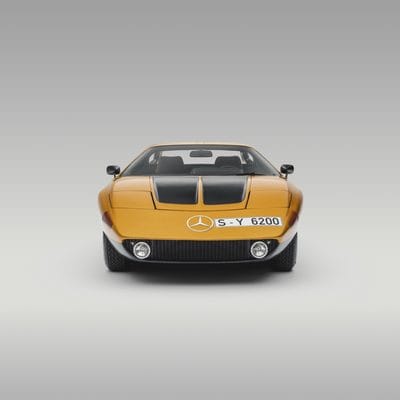
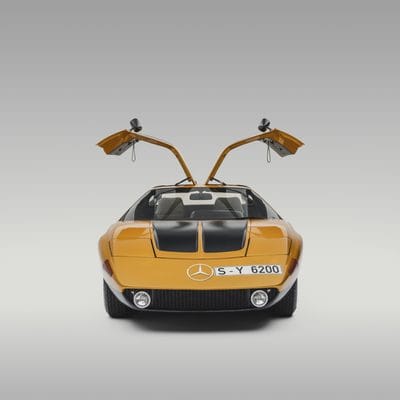
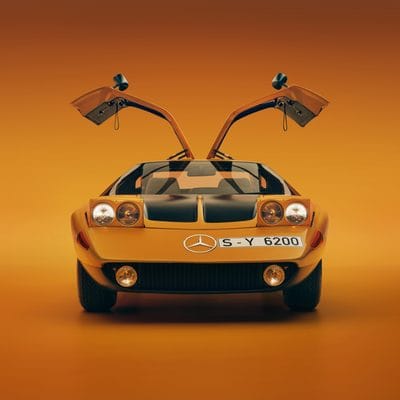
The Mercedes-Benz C 111 was unveiled at the 1969 International Motor Show (IAA) in Frankfurt am Main. It embodied the vision of taking the design and technical innovations of the legendary 300 SL (W198) into a new era.
In total, only 17 prototypes of the iconic super sports car were made in several versions. One was destroyed in a crash test, three were dismantled, and the rest remained with Mercedes-Benz. Despite high interest at the time, the car never went into series production.
“It is reported that prospective buyers even sent blank cheques to Stuttgart, yet Mercedes-Benz never sold a single C 111. The desire to own one of these extraordinary vehicles has resurfaced time and time again ever since. To this day, the fascination with the C 111 remains undiminished, and it continues to inspire us, as the Vision One-Eleven demonstrates.” – Marcus Breitschwerdt, CEO of Mercedes-Benz Heritage GmbH
1970 Mercedes-Benz C 111-II Car 33 at RM Sotheby’s Paris 2027
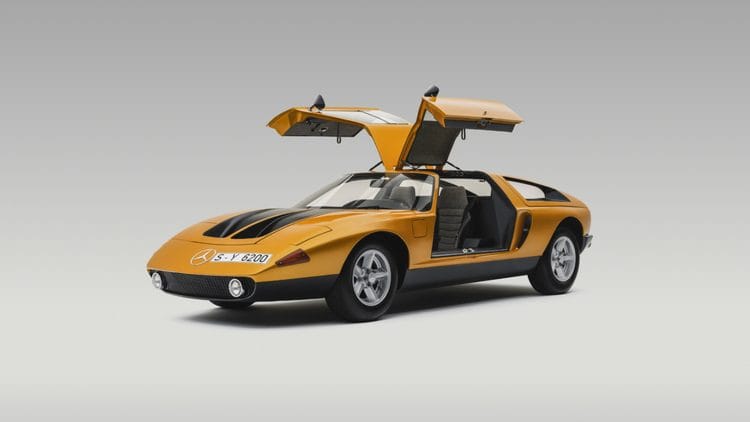
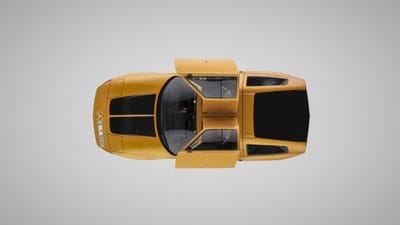
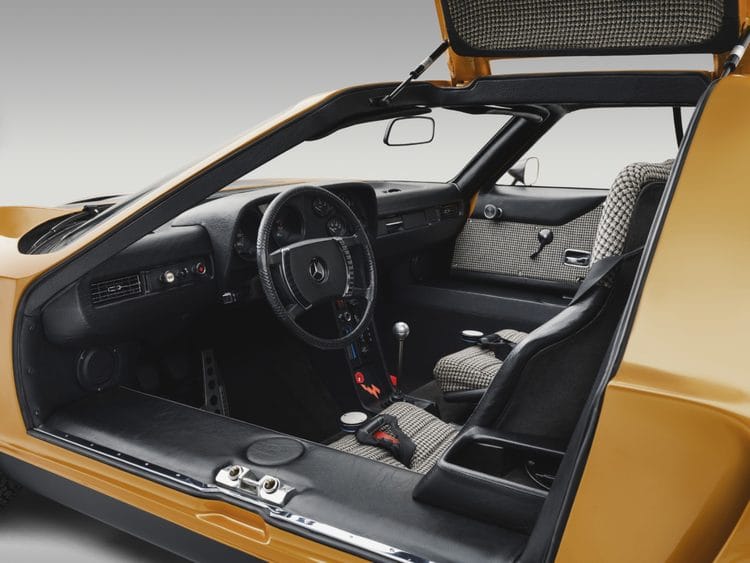
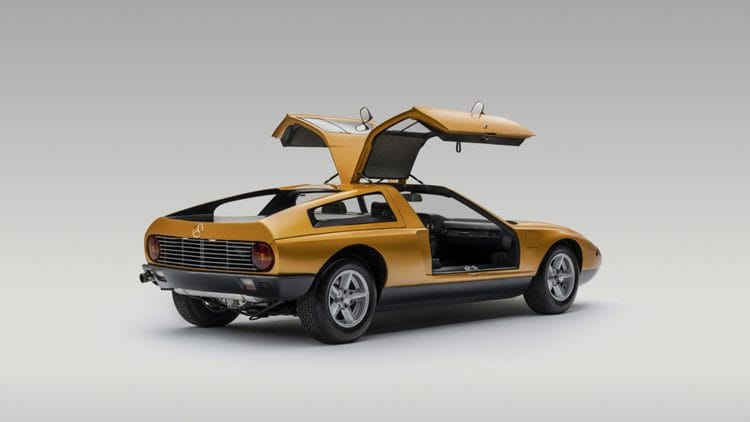
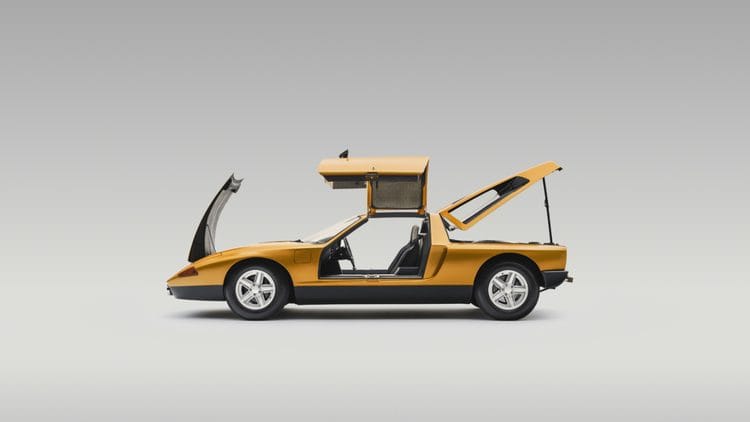
The Mercedes-Benz prototype on offer at RM Sotheby’s Paris Rétromobile 2027, the third C 111-II ever produced, is listed in the Mercedes-Benz Collection as “Car 33.” It was built from March 1970 onward, painted in an orange color known as “Weißherbst,” and fitted with sports seats featuring a grey-and-white houndstooth pattern, a four-spoke safety steering wheel, and a vertically mounted “Becker Europa” radio.
The wheels seem remarkably small by modern standards. Contact with the road is ensured by contemporary 8×15-inch light-alloy wheels; on the racetrack in the 1970s, wide 10×15-inch and 13×15-inch magnesium wheels were used. Both sets of wheels are included in the auction. However, given their age and condition, these magnesium wheels are now only suitable for display purposes.
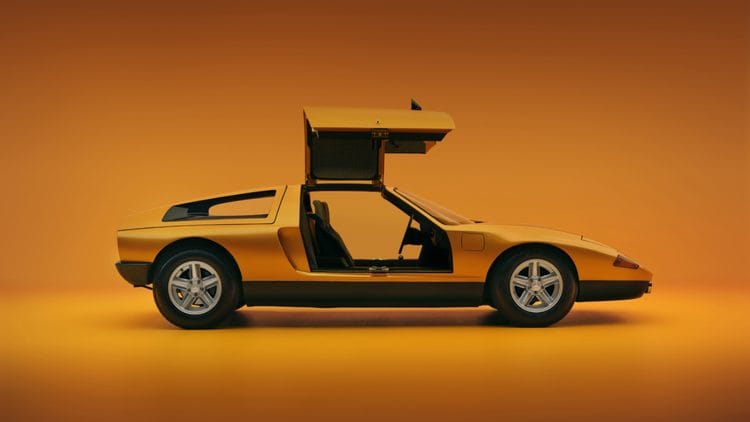
In August 1970, a 257 kW (350 hp) 2.4-liter four-rotor Wankel engine of the M 950 W 48 type was installed in the center of the vehicle. It propels the supercar, which weighs just 1,240 kilograms, to speeds of up to 300 km/h. With the number plate S-Y 6200, this C 111-II joined the test fleet. Among other things, it was used to test a fluidic component designed to ensure even emptying of the two side tanks (combined capacity: 116 liters), to carry out temperature measurements in the rear boot, and to conduct test drives at the Hockenheimring. The rear boot tub is removable and fitted. The anti-lock braking system (ABS) was also tested back then. However, this function is no longer active today.
From an early stage, the vehicle became a prominent ambassador of the C 111 project: Car 33 took center stage in the first issue of the German edition of Playboy, published in 1972. A year earlier, on the test track in Stuttgart, the renowned conductor Herbert von Karajan had been shown the C 111 project, based on this vehicle. In 1975, it was transferred to the company’s own vehicle collection. Since the Mercedes-Benz Museum opened in 2006, Car 33 has been on display in the “Fascination Design” section.
In 2024, Car 33 was restored to running order at the Mercedes-Benz Classic Center in Fellbach. The original patina of the exterior and interior was deliberately preserved, while the powertrain was thoroughly overhauled and a fire-extinguishing system was also fitted in the engine compartment. Later that same year, Car 33 was showcased at the Pebble Beach Concours d’Elegance as part of the “Wedge-Shaped Concept Cars and Prototypes” special exhibition.
The odometer read 24,766 kilometers — refreshingly high compared to so many other modern hypercars that currently sell at public auctions.
Top Mercedes-Benz Prices at Public Auction

The two most expensive cars ever sold at public auction were Mercedes-Benz cars:
- The highest price ever paid for a car at a public auction is $143 million for a 1955 Mercedes-Benz 300 SLR Uhlenhaut Coupé sold by RM Sotheby’s for the Mercedes-Benz Museum in 2022. As with the C 111, this car was considered “family silver” and was sold for charitable purposes.
- The second-most expensive car bought at auction is a 1954/1955 Mercedes-Benz W196R Stromlinienwagen F1 racing car with a streamlined body that sold for $54 million in 2025. It is also the most expensive Formula 1 car ever.
If the C111 sells at the guide price, it will join the 1954 Mercedes-Benz W196R Formula 1 racing car, sold for $30 million at the Bonhams Goodwood Festival of Speed Sale in 2013, as only the fourth Mercedes-Benz car to sell for over $20 million at a public auction.
Mercedes-Benz C 111 Development History
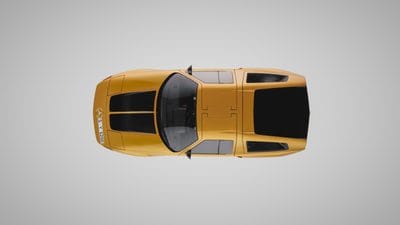
The futuristic C 111 super sports car was unveiled at the IAA in September 1969. Its iconic gullwing doors are reminiscent of the legendary 300 SL Coupé (W198), which had itself set new standards in automotive engineering as far back as 1954. Its story is that of a super sports car with the potential for series production, while also serving as an experimental vehicle for testing new technologies.
With its mid-engine, glass-fiber-reinforced plastic body and Wankel engine technology—regarded as cutting-edge at the time—even the first-generation C 111 was far ahead of its time. Compared with conventional reciprocating piston engines, the rotary piston engine promised high power output combined with a compact design, low weight, and exceptionally smooth running.
In 1970, the radically redesigned C 111-II was presented at the Geneva Motor Show, featuring a more powerful 2.4-liter four-rotor Wankel engine producing 257 kW (350 hp). Weighing just 1,240 kilograms, the C 111-II delivered breathtaking performance for its time: a top speed of up to 300 km/h and 0-100 km/h acceleration in just 4.8 seconds were among the most spectacular performance figures in automotive engineering.
Its futuristic wedge shape, “Weißherbst” paint finish, and extraordinary technology made the C 111 an icon of the brand. Despite enormous public interest, however, the C 111 never went into series production. New emissions standards, high production costs and, finally, the 1973 oil crisis put a stop to a market launch.
Even after the decision not to begin series production, Mercedes-Benz continued to make history with the C 111: In 1976, the C 111-II D, fitted with a five-cylinder OM 617 A turbodiesel engine, set 16 records, including three world records. Over a distance of 10,000 miles, it achieved an average speed of 251.798 km/h. The successful C 111-III from 1978 was also powered by a turbodiesel engine.
In 1979, the C 111-IV, in its final version with a 368 kW (500 hp) twin-turbo V-8, was even faster: On the high-speed track in Nardò, Italy, it set another circuit world record of 403.978 km/h.
Overview of All Mercedes-Benz C 111s Ever Built
A total of 17 Mercedes-Benz C 111 vehicles were built. One vehicle was used for crash tests; three others were dismantled in the 1970s. The Mercedes-Benz vehicle collection still includes 13 examples of the various C 111 variants. No vehicle has left Mercedes-Benz’s possession to date.
Mercedes-Benz built 17 of the C 111 prototypes in different versions:
| No. | Model | Color | Completion Date | First Engine | Comments |
|---|---|---|---|---|---|
| 21 | “Hobel” (slicer or plane) | White, later orange | 04/1969 | Three-rotor Wankel engine M 950 | First prototype vehicle with a provisional body |
| 22 | C 111-I | Mother-of-pearl white, later Weißherbst | 07/1969 | Three-rotor Wankel engine M 950 | The first “proper” C 111; converted to a four-rotor Wankel engine in July 1970 |
| 23 | C 111-I | Mother-of-pearl white, later Weißherbst | 08/1969 | Three-rotor Wankel engine M 950 | Converted to a four-rotor Wankel engine in June 1970 |
| 24 | C 111-I | Mother-of-pearl white | 08/1969 | Three-rotor Wankel engine M 950 | Side-impact tests in June 1970 |
| 25 | C 111-I | Weißherbst | 08/1969 | Dummy engine | IAA exhibition car; fitted with an M 117 V-8 engine in July 1970 and a four-rotor Wankel engine in April 1972 |
| 26 | C 111-I | Mother-of-pearl white, later Weißherbst | 09/1969 | Four-rotor Wankel engine M 950 | First C 111 with a four-rotor Wankel engine |
| 31 | C 111-II | Weißherbst | 03/1970 | Four-rotor Wankel engine M 950 | First C 111-II; converted into a diesel record-breaking car in 1975/76; record-breaking run in Nardò in June 1976 |
| 32 | C 111-II | Weißherbst | 03/1970 | Dummy engine | Exhibition vehicle at the Geneva Motor Show |
| 24 a | C 111-II | Weißherbst | 07/1970 | Three-rotor Wankel engine M 950 | Replacement for Car 24, built to C 111-II specifications; used for bodywork testing and fitted with a three-rotor Wankel engine; converted to a four-rotor Wankel engine in 1973 |
| 33 | C 111-II | Weißherbst | 08/1970 | Four-rotor Wankel engine M 950 | Second C 111-II in the test fleet, fitted with a four-rotor Wankel engine |
| 34 | C 111-II | Weißherbst | 10/1970 | Four-rotor Wankel engine M 950 | Third C 111-II in the test fleet, fitted with a four-rotor Wankel engine |
| 35 | C 111-II | Weißherbst | 12/1970 | M 116 V8 petrol engine | Final C 111-II from the original series; converted to a four-rotor Wankel engine in May 1972 and refitted with an M 116 V8 petrol engine in 2013/14 |
| 36 | C 111-II | Weißherbst | 07/1975 | Four-rotor Wankel engine M 950 | First C 111 with a plastic floor assembly |
| 37 | C 111-II | Weißherbst | 10/1975 | Five-cylinder turbodiesel OM 617 A | Second C 111 with a plastic floor assembly; originally intended for diesel record-breaking runs, but never used for that purpose |
| 41 | C 111-III | Metallic silver | 10/1977 | Five-cylinder turbodiesel OM 617 A | Record-breaking run in Nardò in April 1978; converted into a C 111-IV at the end of 1978; further record-breaking run in Nardò in May 1979 |
| 42 | C 111-III | Metallic silver | 02/1978 | Five-cylinder turbodiesel OM 617 A | Record-breaking run in Nardò in April 1978 |
| 43 | C 111-III | Metallic silver | 07/1978 | Dummy engine | C 111-III Exhibition Vehicle |
Weißherbst here indicates an orange color. (Directly, “weiss” and “herbst” translate as “white autumn,” but in German Weißherbst is usually used for a type of rosé wine; in French, vin gris.)
Paris Rétromobile Auctions 2027

The Paris Salon Rétromobile Week in early February traditionally marks the start of the European classic car auction year. Auctions announced for 2027 include:
- Artcurial: 5 February 2027
- Bonhams: 5 February 2027 at the Grand Palais.
- Broad Arrow: 3 February 2027 at The Peninsula Paris.
- Gooding Christie’s: 4 February 2027 at Paris Expo – Porte de Versailles.
- RM Sotheby’s: 3 February 2027 at Les Salles du Carrousel in the Louvre Palace.
Paris Rétromobile 2027 Auction Announcements
- RM Sotheby’s: Mercedes-Benz C 111